
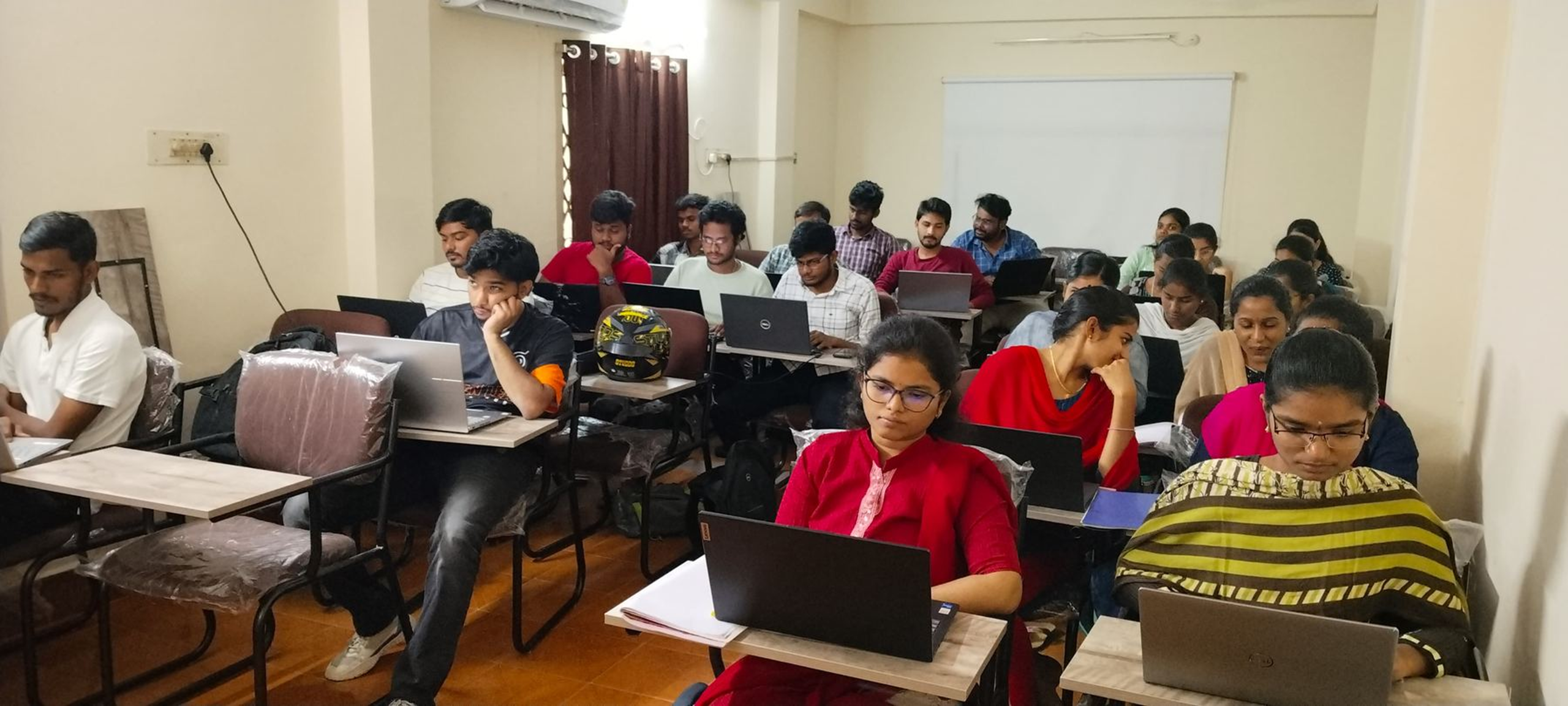
Oracle Fusion Financials Training in Hyderabad
Learn Oracle Fusion Cloud Financials the way implementation teams actually use it. Next IT Career runs a 60-day, instance-driven programme in Ameerpet covering enterprise structures, General Ledger, Payables, Receivables, Fixed Assets, Cash Management and Tax.
Every module is taught through live configuration, real transaction flows and a full period-close cycle — then backed by mock interviews and a dedicated placement cell until you sign an offer.
Course Snapshot
Oracle Fusion Financials Training Institute in Hyderabad
Oracle Fusion Financials is the finance pillar of Oracle Cloud ERP — a connected set of applications covering General Ledger, Payables, Receivables, Fixed Assets, Cash Management, Expenses and Tax, all posting through a single Subledger Accounting engine. Our Hyderabad course teaches you to configure, transact and close across those applications in 60 days.
Finance teams across India are moving off on-premises E-Business Suite and into Oracle Cloud, and every one of those migrations needs consultants who understand both the accounting and the setup screens behind it. That is exactly the gap this programme is built for. You start with enterprise structures — legal entities, business units, chart of accounts, ledgers and calendars — because nothing else in Fusion makes sense until the backbone is clear.
From there the course moves module by module. You raise invoices and run payment batches in Payables, collect and apply receipts in Receivables, add and depreciate assets, reconcile bank statements in Cash Management, and watch each of those transactions turn into journal entries through Subledger Accounting. Data migration is taught the way projects run it — FBDI templates, ADFdi spreadsheets and error correction — and reporting is covered with OTBI, BI Publisher and Smart View, so you can answer the reporting questions that come up in every interview.
Sessions are led by consultants who have delivered Oracle Cloud implementations and support engagements, not by trainers reading from courseware. Classes run in Ameerpet and live-online, recordings stay available through your LMS login, and the placement cell steps in from week six with resume positioning and scenario-based mock interviews. If you are also comparing finance platforms, our Workday Finance training covers the same career track on a different stack.
Page last reviewed: 16 November 2026 · Written and reviewed by the Oracle Cloud ERP faculty at Next IT Career, Ameerpet, Hyderabad.
Key Highlights of Oracle Fusion Financials Training in Hyderabad
Eleven things that make this programme behave like a project induction rather than a lecture series.
Module-Complete Coverage
General Ledger, Payables, Receivables, Fixed Assets, Cash Management, Tax, Expenses and Intercompany — taught in the order a real implementation configures them.
Guided Instance Access
You configure in a working Fusion environment from week one — setups, transactions, approvals and close runs performed by you, not demonstrated on a slide.
Implementation-Side Trainers
Sessions run by consultants with live Oracle Cloud rollout and AMS support experience, so you hear how issues actually get solved on a project floor.
Accounting Primer Included
Week one builds the double-entry foundation, accrual concepts and subledger-to-GL flow, so non-commerce graduates are never left guessing why an entry posted.
FBDI & ADFdi Migration Labs
Load suppliers, customers, invoices and opening balances with real templates — then debug the rejection file, which is the part interviews always probe.
OTBI, BIP & Smart View
Build subject-area analyses, edit a BI Publisher layout and pull a financial report into Excel — the three reporting skills every finance client asks for.
End-to-End Period Close
Run a complete month-end: subledger sweeps, accruals, reconciliation, revaluation, translation and closing the GL period with exceptions resolved.
Roles, Approvals & Workflow
Configure job and data roles, build invoice and expense approval rules in BPM, and understand segregation-of-duties questions before an auditor raises them.
Batches That Fit Your Shift
Early-morning, evening, weekend and fast-track batches in classroom or live-online format — switch between them without losing your place.
Setup Documents & LMS
Configuration workbooks, test scripts, BR100-style setup documents, class recordings and a curated interview question bank, all inside your LMS login.
Scenario-Based Interview Prep
Mock rounds built on real client questions — intercompany balancing, tax setup, reconciliation differences — plus resume positioning for consultant roles.
What Is Oracle Fusion Financials & How Does It Work?
Before the setups make sense, the architecture has to. Here is the short version of what you will be configuring.
What is Oracle Fusion Financials?
Oracle Fusion Financials is the accounting and finance suite inside Oracle Cloud ERP, delivered as software-as-a-service and updated by Oracle on a fixed quarterly cycle. Instead of separate products stitched together, every finance application shares one data model, one security framework and one reporting layer.
- General Ledger and financial reporting
- Accounts Payable and payments
- Accounts Receivable and collections
- Fixed Assets and depreciation
- Cash Management and bank reconciliation
- Tax, Expenses and Intercompany
How does Oracle Fusion Financials work?
Transactions are entered in a subledger — an invoice, a receipt, an asset addition — and the Subledger Accounting engine applies accounting rules to turn each one into a balanced journal before it reaches the General Ledger. Because the rules sit in one place, the same invoice can be accounted differently for statutory, corporate and management ledgers without re-entering anything.
- Enterprise structures define the backbone
- Chart of accounts and value sets drive coding
- Subledgers capture business transactions
- Accounting rules create the journals
- GL holds balances across ledgers
- OTBI and BIP read it all back out
What is Oracle Fusion Financials used for?
Organisations use it to run the whole finance operation on one platform: recording payables and receivables, managing cash, tracking capital assets, calculating transaction tax across countries, closing the books every period and publishing statutory and management reports from the same set of balances.
- Multi-entity, multi-currency accounting
- Supplier invoice capture and payment runs
- Customer billing, receipts and dunning
- Capitalisation and asset lifecycle tracking
- Automated bank statement reconciliation
- GST and cross-border tax determination
- Period close, accruals and revaluation
- Audit trails and compliance reporting
About this Oracle Fusion Financials course
This is a functional consulting programme with the techno-functional layer employers expect. You leave with configured setups you built yourself, a documented end-to-end business case, and the vocabulary to hold a requirements discussion with a finance controller. The same faculty supports learners from our other ERP tracks, so cross-module questions get answered properly.
- 60 days of instructor-led sessions
- Hands-on configuration in a live instance
- Data migration with FBDI and ADFdi
- Approval workflow and role setup
- OTBI, BI Publisher and Smart View reporting
- A documented end-to-end case study
- Classroom in Ameerpet or live-online
- Course completion certificate
Oracle Fusion Financials Course Syllabus — Module by Module
Ten modules across 60 days. Tap any module to see what is covered inside it.
- Double-entry accounting, accruals and the accounting cycle
- How a subledger transaction becomes a GL journal
- Oracle Cloud ERP landscape and quarterly update model
- Navigation, work areas, Functional Setup Manager and offerings
- Implementation lifecycle: CRP, SIT, UAT, cutover, hypercare
- Legal entities, legal reporting units and business units
- Value sets, chart of accounts structure and instances
- Accounting calendars, currencies and conversion rates
- Primary, secondary and reporting currency ledgers
- Account hierarchies, trees and segment security rules
- Manual, recurring, reversing and statistical journals
- Journal approval rules and spreadsheet journal upload
- Intercompany balancing rules and suspense accounting
- Revaluation, translation and consolidation basics
- Period open, close and the close monitor
- Supplier creation, sites, bank accounts and tax details
- Invoice types: standard, prepayment, credit memo, debit memo
- Two-way and three-way matching with purchase orders
- Payment process requests, payment methods and formats
- Holds, approvals, withholding tax and AP period close
- Customer accounts, sites, profiles and payment terms
- Transaction types, sources, AutoInvoice and memo lines
- Receipt classes, methods, lockbox and AutoMatch
- Credit memos, adjustments, write-offs and refunds
- Revenue recognition rules, dunning and AR close
- Asset books, categories, locations and key flexfields
- Additions: manual, mass additions from AP, CIP assets
- Depreciation methods, prorate conventions and run cycle
- Adjustments, transfers, reclassification and revaluation
- Retirements, reinstatements and asset reconciliation to GL
- Banks, branches, bank accounts and cash pools
- Bank statement formats, loading and transaction codes
- Automatic and manual reconciliation, matching rules
- Cash positioning and forecasting essentials
- Expense templates, policies, audit rules and reimbursement
- Tax regimes, taxes, statuses, jurisdictions and rates
- Tax rules, determining factors and tax recovery
- India GST considerations and cross-border scenarios
- Intercompany organisations, balancing and transactions
- Tax reporting and reconciliation outputs
- Event classes, journal line rules and account rules
- Creating and testing a custom subledger accounting method
- FBDI templates, file-based loads and error handling
- ADFdi spreadsheets and opening balance conversion
- Roles, data access sets and approval workflow in BPM
- OTBI subject areas, analyses and dashboards
- BI Publisher data models, templates and bursting basics
- Financial Reporting Studio and Smart View retrieval
- Full month-end close across every subledger
- Capstone: configure a new legal entity end to end and present it
Who Uses Oracle Fusion Financials & Who Should Learn It?
Oracle Cloud ERP runs the back office for manufacturing groups, banks, hospitals, retailers and public sector bodies, and the consulting demand sits with system integrators and shared-service centres across Hyderabad, Bengaluru, Pune and Chennai. These are the backgrounds that convert fastest into Fusion Financials roles.
Accountants & Finance Executives
If you already close books in Tally, SAP or Excel, you bring the domain half. The course adds the configuration half that turns you into a consultant.
Oracle EBS Finance Consultants
Move your R12 experience to the cloud. The mapping sessions show exactly where your existing setup knowledge still applies and where Fusion thinks differently.
B.Com, M.Com & MBA Finance Graduates
The quickest route from a commerce degree into an IT consulting salary. Your accounting fundamentals are the hardest part, and you already have them.
CA, CMA & ACCA Candidates
Add a systems skill to a professional qualification and move into ERP advisory, process design or finance transformation roles with far less competition.
ERP Support & AMS Engineers
Ticket-queue experience becomes consulting experience once you can configure the modules you currently only troubleshoot.
Business & Systems Analysts
Requirement gathering gets much sharper when you know what the application can and cannot do before you write the specification.
Career Restarters
Returning after a break? Cloud ERP skills are evaluated on current platform knowledge, which makes this one of the fairer re-entry paths in IT.
Technical Consultants Going Functional
PL/SQL, BI Publisher or integration developers who want to own requirements instead of only building to them.
Why Choose Us for Oracle Fusion Financials Training in Hyderabad?
Six reasons learners pick our Ameerpet centre over a generic recorded course.
Trainers From Live Projects
Our faculty configure Oracle Cloud Financials for a living. When you ask why a client would use a secondary ledger or how a tax rule failed in production, the answer comes from experience rather than a manual.
One Case Study, Start to Finish
A single fictional group of companies runs through every module, so by the capstone you have configured its structures, transacted across its subledgers and closed its books — a story you can walk an interviewer through.
Documentation You Can Reuse
Every module ends with a setup document in the format consulting firms expect. You finish with a folder of configuration workbooks and test scripts, not just notes.
A Placement Cell That Calls Back
Profile positioning, module-wise mock interviews and recruiter introductions across Hyderabad and India. Message the placement team on WhatsApp.
Doubt Support After Class
Batch-wise groups stay open after the programme ends. Stuck on a setup in your first project? Ask the trainer who taught it, not a ticketing queue.
Small Batches, Real Discussion
Batch sizes are capped so every learner gets instance time and gets questioned in class. Group walkthroughs mirror the review meetings you will sit in on a project.
Oracle Fusion Financials Certification Support
Every learner who completes the programme receives a course completion certificate from Next IT Career, issued against the configuration work and capstone project you submitted — not against attendance alone.
Alongside it, we prepare you for Oracle’s own cloud certification path. Sessions cover the exam blueprint, question patterns and the setup areas candidates most often lose marks on, so you can book the official exam with a clear plan. The Oracle credential itself is awarded by Oracle through its certification programme; Next IT Career is an independent training institute and provides preparation, not the Oracle exam or its certificate.
- Course completion certificate on finishing the programme
- Capstone configuration project and setup documentation
- Guided preparation for the Oracle cloud certification exam
- Shareable on LinkedIn and with recruiters
Where Our Alumni Work Today
12,000+ Next IT Career alumni work across 100+ IT and consulting companies — from global system integrators running Oracle Cloud ERP rollouts to shared-service centres supporting them.












Company names and logos are trademarks of their respective owners and are shown to indicate where our alumni have been employed. Their use does not imply sponsorship, partnership or endorsement of Next IT Career.
Skills Developed Through Oracle Fusion Financials Training
Nine capabilities mapped directly to what interviewers test and what projects bill for.
Enterprise Structure Design
Translate a group’s legal and operating shape into legal entities, business units, ledgers and a chart of accounts that will still work after the next acquisition.
General Ledger Operations
Journals, allocations, intercompany balancing, revaluation and translation — plus the discipline of a clean period close.
Procure-to-Pay Configuration
Supplier setup, invoice matching, holds, payment process requests and withholding tax across the full payables cycle.
Order-to-Cash Configuration
Transaction sources, AutoInvoice, receipt application, credit memos and collections — the receivables flow end to end.
Asset Lifecycle Management
Categories, additions from payables, depreciation runs, transfers, retirements and reconciliation back to the General Ledger.
Subledger Accounting Rules
Build and test accounting methods so the same transaction can satisfy statutory, corporate and management reporting at once.
Data Migration & Conversion
Prepare FBDI files, run import processes, read the rejection output and correct source data before the next load.
Reporting & Analytics
OTBI analyses, BI Publisher layouts, Financial Reporting Studio statements and Smart View retrievals for finance users.
Security & Approval Workflow
Role provisioning, data access sets and BPM approval rules that pass a segregation-of-duties review.
Job Roles After Oracle Fusion Financials Training
Nine designations graduates move into across implementation, support and in-house finance systems teams.
Oracle Fusion Financials Functional Consultant
Gathers requirements, configures the finance modules and runs conference room pilots with the client’s accounting team.
Oracle Cloud ERP Consultant
Works across Financials and adjacent cloud pillars on implementation projects, owning setups, testing and cutover tasks.
Techno-Functional Consultant
Bridges finance configuration and the technical layer — FBDI conversions, BI Publisher reports and integration touchpoints.
Financial Systems Analyst
Sits inside the finance function, maintains setups, resolves user issues and manages quarterly update regression testing.
ERP Application Support Analyst
Handles AMS tickets across GL, AP, AR and FA, diagnoses accounting exceptions and supports every period close.
Record-to-Report Process Specialist
Owns the close calendar, reconciliations and reporting pack in a shared-service or GCC finance operation.
Oracle Fusion Financials Lead
Runs a module track on an implementation — design decisions, junior consultants, client sign-off and go-live readiness.
Finance Transformation Consultant
Redesigns finance processes around cloud capability, often alongside a CA or MBA qualification and advisory experience.
Oracle Cloud Solution Architect
Sets the overall ERP design, integration strategy and data model across pillars for large multi-country programmes.
Pay Scale for Oracle Fusion Financials Professionals
Cloud ERP finance consultants are priced on scarcity: the accounting depth and the configuration skill rarely sit in the same person. The ranges below are indicative and move with experience, domain exposure, certification and the hiring company.
Fresher / Associate Consultant (0–2 Yrs)
Typical entry band for graduates joining ERP practices or support teams.
Hyderabad Average
Mid-point for Oracle Cloud Financials consultants across the Hyderabad market.
Functional Consultant (2–5 Yrs)
Consultants with at least one full implementation or steady AMS ownership.
Module Lead (5–9 Yrs)
Leads who own design decisions and client sign-off for a finance track.
Solution Architect / Practice Lead
Senior architects on multi-country Oracle Cloud ERP programmes.
Average · All Experience Levels
Blended national annual average across Oracle Cloud Financials roles — your benchmark for this career track.
Indicative figures compiled from publicly available salary listings for Oracle Cloud ERP finance roles in India; last reviewed November 2026. Replace with your own verified source before publishing. Actual offers vary by employer, experience, domain depth and interview performance.
From Enrolment to Offer Letter
Four milestones, each with a trainer and a placement mentor attached to it.
Enrol & Get Your Instance
Attend the free demo, pick a batch that fits your shift, and receive your LMS and practice environment access in the first session.
Configure Module by Module
Sixty days of guided setup across structures, GL, AP, AR, FA, Cash Management and Tax — each module documented as you finish it.
Close the Books & Certify
Run a full period close on your own case study, submit the capstone configuration and collect your course completion certificate.
Interview & Get Placed
Resume positioning, scenario-based mock rounds on real client questions, and recruiter introductions until you accept an offer.
Our learners.
Real offer letters.
Oracle Cloud ERP hiring in Hyderabad runs all year — implementation partners, AMS teams and GCC finance units all recruit Fusion Financials consultants. Swipe to see recent career moves.
Fusion Financials Consultant
Techno-Functional Consultant
Financial Systems Analyst
ERP Support Analyst
Record-to-Report Specialist
Fusion Financials Lead
What Our Learners Say
I joined the Oracle Fusion Financials batch as a B.Com graduate with zero ERP experience. The trainer explained every module from the accounting basics before jumping into configuration. By the end of the course I could configure GL, AP and AR on my own. Got placed at a consulting firm within a month. Highly recommend Next IT Career!
Best Oracle Fusion Financials training in Hyderabad. The live instance access made all the difference — we did actual period closes, payment runs and bank reconciliation instead of just watching slides. The placement team helped me crack two interviews in the same week. Very happy with my decision to join here.
I was an Oracle EBS consultant for 5 years and needed to move to Cloud. This course covered exactly the differences I needed to understand. The FBDI migration labs and Subledger Accounting module were particularly useful. The trainer's real project experience shows in every session. Worth every rupee.
The mock interviews were the best part for me. They asked scenario-based questions on intercompany balancing, tax setup and AP holds — exactly the kind of questions I faced in my actual interviews. I joined the weekend batch and the schedule was very convenient for working professionals. Excellent training centre in Ameerpet.
I completed my MBA Finance and was confused about which ERP to learn. The counsellor at Next IT Career guided me to Oracle Fusion Financials based on the current market demand. The 60-day course was very structured and the capstone project gave me real confidence for interviews. Got placed at an MNC with 6.8 LPA. Thank you team!
What sets this institute apart is the doubt support after class. I had several configuration issues while practising on the instance and the trainer resolved them the same evening on the batch group. The OTBI and BI Publisher reporting sessions were a bonus — most other institutes skip reporting entirely. Strongly recommend for anyone targeting Oracle Cloud ERP roles.
Oracle Fusion Financials Training — Frequently Asked Questions
The questions prospective learners ask our counsellors most often.
An accounting background helps but is not compulsory. The first week of the programme covers double-entry basics, the accounting cycle and how a subledger posts to the General Ledger, so commerce graduates, B.Tech graduates and working IT professionals all start from the same baseline.
The programme runs for 60 days of instructor-led sessions, followed by project work and interview preparation. Weekday, weekend and fast-track batches are available in both classroom and live-online formats.
Enterprise structures, chart of accounts and ledgers, General Ledger, Accounts Payable, Accounts Receivable, Fixed Assets, Cash Management, Oracle Fusion Tax, Expenses, Intercompany, Subledger Accounting, FBDI and ADFdi data migration, approval workflows, OTBI and BI Publisher reporting, and the full period-close cycle.
Yes. Every learner gets guided access to a practice instance during the programme so that setups, transactions and period-close runs are performed hands-on rather than observed in a slide deck.
It is primarily a functional consulting track. The course also covers the techno-functional layer most employers ask for, including FBDI templates, BI Publisher report edits, approval rule configuration and integration touchpoints, so you can work alongside technical teams.
Entry-level Oracle Cloud Financials consultants in India typically begin between ₹4 and ₹7 lakh per annum, while consultants with two to five years of implementation experience commonly see ₹9 to ₹16 lakh. These figures are indicative and vary by employer, domain depth and interview performance.
Yes. Next IT Career runs a dedicated placement cell that prepares your consultant profile, conducts module-wise mock interviews, runs scenario-based functional rounds and shares your resume with hiring partners across Hyderabad and India.
Yes. Book a free demo session to meet the trainer, see the instance walkthrough and review the module plan before you decide. Demo seats are confirmed on the same working day.
Fees depend on the batch format you choose — classroom, live-online or fast-track — and instalment options are available. Book a free demo and our counsellor will confirm the current fee and any running batch offer on the same call.
Classroom batches run at our Ameerpet centre — 6th Floor, Nilgiri Block, Aditya Enclave, 604/B, Kumar Basti, Ameerpet, Hyderabad 500016 — which is walking distance from the Ameerpet metro station. Learners outside Hyderabad attend the same sessions live online.
Build a Career in Oracle Fusion Financials
Sixty days of configuration, one complete period close and a placement team that keeps calling until you have an offer. Your next role in Oracle Cloud ERP starts with a free demo class.